Atrium
Atrium
Goal
Finding a stage to play on is one of the hardest parts of being a musician. Venue information is scattered, booking contacts are hard to find, and you never know what to expect until you arrive.
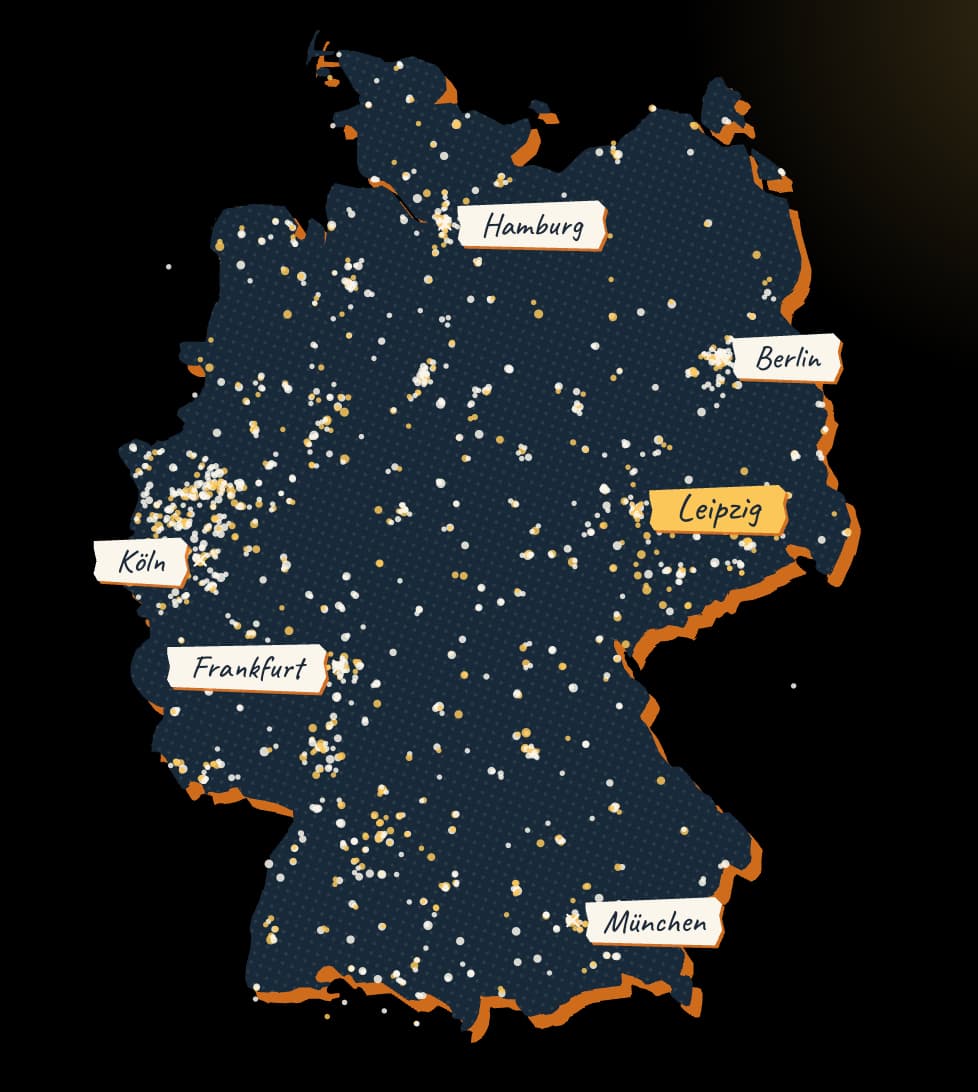
Atrium solves this: a platform that collects live music venues across Germany with booking information and honest reviews from artists who have actually played there. From artists, for artists — free and open to all.
Challenges
Atrium serves two very different user groups: musicians looking for places to play, and venue owners managing their profiles and booking requests. The app is built around this split, with separate route trees and onboarding flows for each role, while sharing a common design system built with Tailwind CSS and Radix UI.
For the backend I chose Convex, a real-time database where queries, mutations and the schema all live in TypeScript. Every part of the app — venue profiles, messaging, communities, booking requests — updates live without any manual cache invalidation. Authentication is handled by Clerk, synced to the database via webhooks.
Since the platform targets both German and international users, the whole site is fully localized in German and English, including server-rendered SEO pages for every city and venue.
Geospatial Search
The heart of Atrium is its map-based venue search. Venues are stored in a geospatial index, so searches run against the visible map bounds: pan the map over Berlin and the venues of Berlin appear in real time.
The map is built on the Google Maps API, combined with server-rendered city pages so that search engines can discover every venue as well.
Booking & Community
Musicians can send booking requests directly through the platform, with an integrated messaging system for negotiating dates. Venue owners manage incoming requests through their own dashboard.
Beyond bookings, Atrium offers communities where musicians connect with like-minded artists and industry professionals — with posts, threads and likes, all updating in real time.
Built by the Scene
Atrium is built by musicians from Leipzig who know first-hand how hard it is to find good venues. The venue data is hand-curated by people from the local scene, starting with Leipzig as the reference city and growing city by city across Germany.